
Want to improve your website’s Google rankings? Learn proven SEO strategies, on-page optimization, and ranking techniques in How to Rank at the Top of Google in 2026.
Search Engine Optimization, commonly known as SEO, is the process of improving a website’s visibility on search engines like Google, Bing, and Yahoo. The main goal of SEO is to increase organic, or unpaid, traffic to a website by helping it appear higher in search engine results pages (SERPs). When people search online for products, services, or information, they usually click on the top results. SEO helps websites rank better so they can attract more visitors and potential customers.

In today’s digital world, SEO has become an essential part of online marketing. Millions of websites compete for attention on the internet, and SEO helps businesses stand out from competitors. Whether it is a small blog, an online store, or a large company website, SEO plays a major role in improving online presence and reaching target audiences. Discover the best AI-powered SEO tools for keyword research, technical SEO, content optimization, and website analysis.
Search engines work by using automated programs called crawlers or spiders. These crawlers scan websites, collect information, and store it in a database called an index. When a user searches for something, the search engine analyzes its index and shows the most relevant and useful results. SEO helps search engines understand website content more effectively so that the website can rank for related searches.
SEO is generally divided into three major categories: On-Page SEO, Off-Page SEO, and Technical SEO.
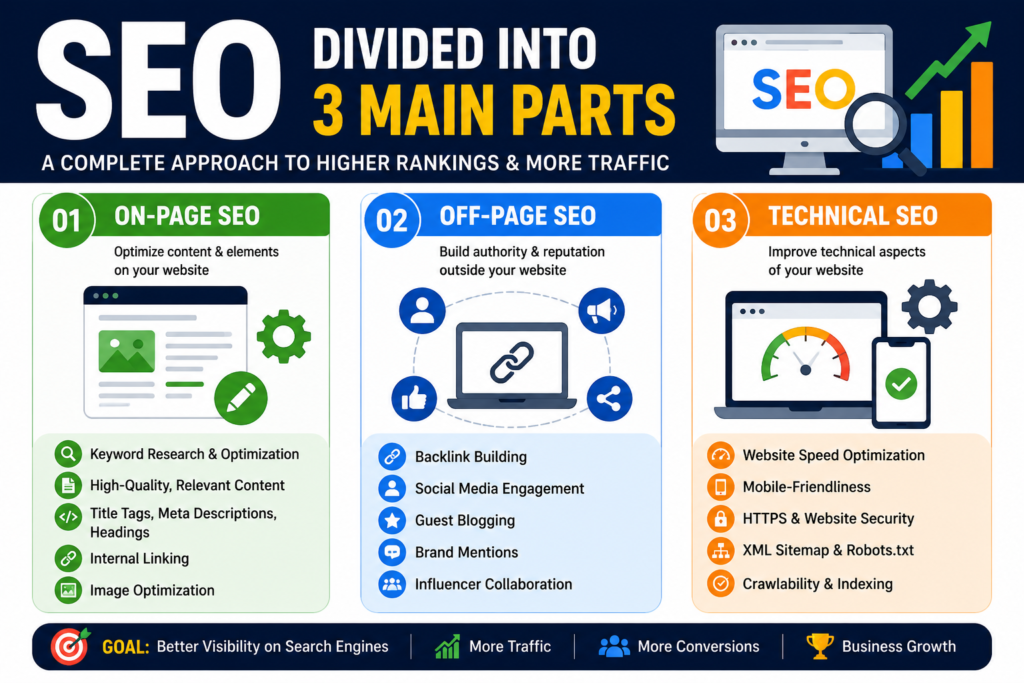
On-Page SEO refers to all the optimization activities performed directly on a website. It includes creating high-quality content, using relevant keywords, writing attractive titles, optimizing images, and improving internal linking. Keywords are the words or phrases people type into search engines. For example, if someone searches for “best laptops for students,” websites containing useful information about that topic have a better chance of ranking. Master SEO, keyword research, technical SEO, Google Search Console, on-page SEO, off-page SEO, and AI-powered digital marketing with the Digital Marketing Courses in Andheri.
Content quality is one of the most important factors in On-Page SEO. Search engines prefer websites that provide valuable, informative, and original content. Well-written articles, blogs, videos, and guides help users solve problems or answer questions. Search engines reward websites that deliver a good user experience and reliable information.
Meta titles and meta descriptions are also important parts of On-Page SEO. A meta title is the clickable heading displayed in search results, while the meta description is a short summary below it. These elements help users understand what the page is about and encourage them to click on it.
Another key factor is keyword optimization. SEO experts research keywords that users commonly search for and include them naturally in website content. However, overusing keywords, known as keyword stuffing, can harm rankings because search engines prefer natural and user-friendly writing.
Off-Page SEO involves activities performed outside the website to improve its reputation and authority. The most important part of Off-Page SEO is backlink building. Backlinks are links from other websites pointing to your website. Search engines view backlinks as signs of trust and credibility. If many high-quality websites link to a page, search engines consider it valuable and may rank it higher.
Social media sharing, guest blogging, influencer collaborations, and online mentions also contribute to Off-Page SEO. Although social media signals may not directly affect rankings, they help increase visibility and website traffic.

Technical SEO focuses on improving the technical aspects of a website to help search engines crawl and index it efficiently. This includes improving website speed, mobile friendliness, security, and site structure. A fast-loading website provides a better user experience and reduces bounce rates. Since many users browse the internet on smartphones, mobile optimization is extremely important.
Website security is another major factor in Technical SEO. Websites using HTTPS encryption are considered safer and more trustworthy. Search engines often favor secure websites in rankings. Proper URL structures, XML sitemaps, and error-free navigation also improve technical performance.
One of the most important aspects of SEO is user experience. Search engines aim to provide users with the best possible results. Websites that are easy to navigate, visually appealing, and informative tend to perform better in rankings. Factors such as page speed, readability, responsive design, and low bounce rates all contribute to a positive user experience.
Local SEO is another specialized area of SEO. It helps businesses appear in location-based searches such as “restaurants near me” or “best salons in Mumbai.” Businesses optimize their online presence through local listings, customer reviews, and location-specific keywords. Local SEO is especially useful for small businesses that want to attract nearby customers.
SEO offers many benefits to businesses and website owners. One major advantage is increased organic traffic. Unlike paid advertising, SEO helps websites attract visitors without paying for every click. Although SEO requires time and effort, it provides long-term results and sustainable growth.
Another advantage is credibility and trust. Users often trust websites that appear on the first page of search results because they view them as more reliable and authoritative. High rankings improve brand reputation and customer confidence.
SEO is also cost-effective compared to many traditional marketing methods. While paid advertisements stop generating traffic once the budget ends, SEO can continue bringing visitors over time. A well-optimized website can attract thousands of users consistently.
Another important benefit is better targeting. SEO helps businesses reach users who are actively searching for related products or services. This increases the chances of conversions and sales because the audience already has interest in the topic.
Despite its advantages, SEO also has challenges. SEO is a long-term process and results may take weeks or months to appear. Search engine algorithms change frequently, meaning strategies that work today may become less effective later. Businesses must continuously update content and adapt to new SEO trends.
Competition is another challenge. Popular keywords are often targeted by many websites, making it difficult to rank on the first page. Companies need strong content strategies, technical improvements, and quality backlinks to compete effectively.
SEO professionals use various tools to analyze performance, track rankings, and identify opportunities. These tools help monitor website traffic, keyword rankings, user behavior, and technical issues. Continuous analysis and optimization are essential for SEO success.
In conclusion, SEO is the process of improving a website’s visibility in search engine results to attract more organic traffic. It involves techniques such as keyword optimization, content creation, backlink building, and technical improvements. SEO helps businesses increase online presence, build credibility, improve user experience, and achieve long-term growth. As internet usage continues to grow, SEO remains one of the most valuable and effective strategies in digital marketing.